“Get a scan” is not a complete set of directions.
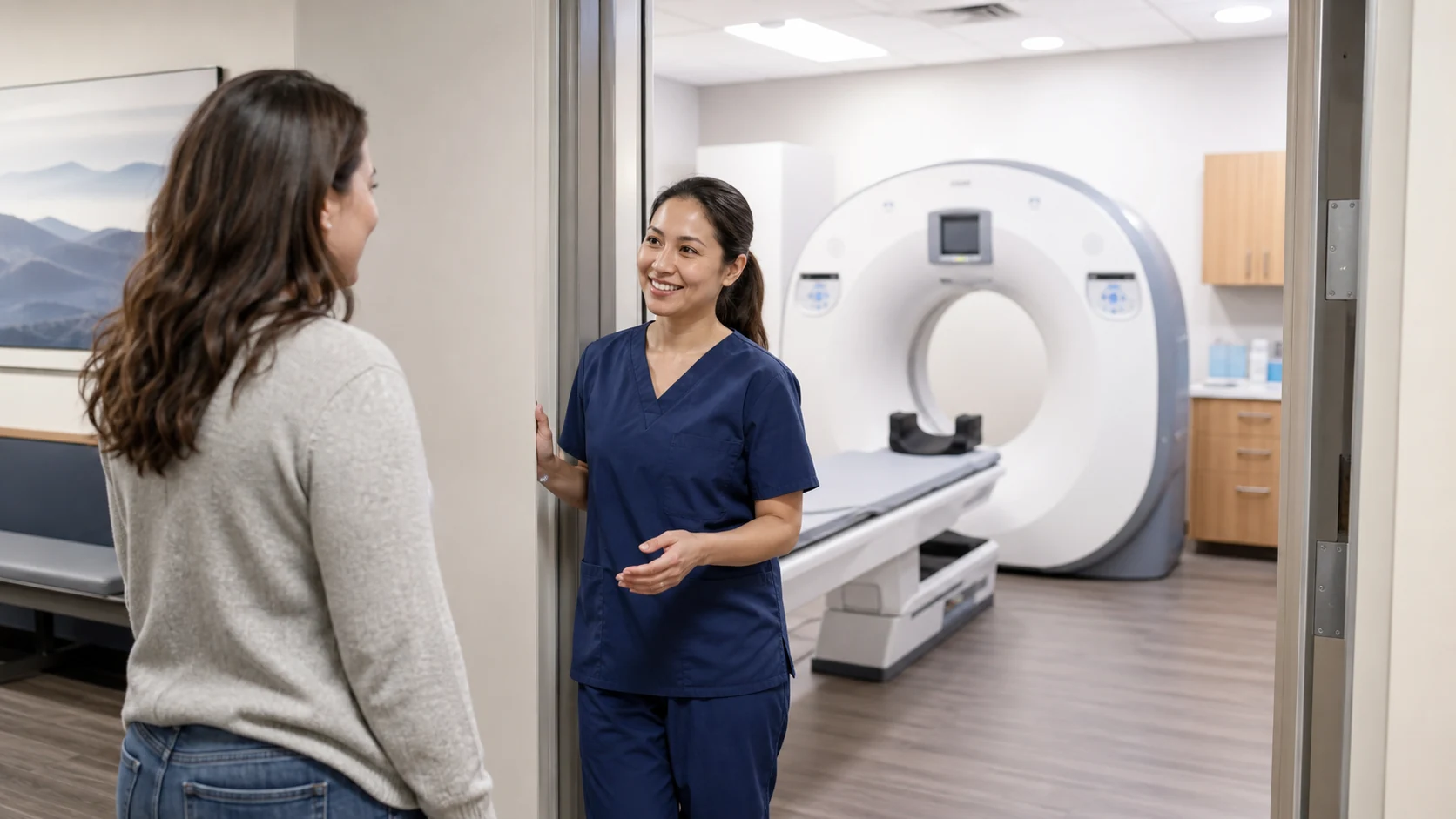
When you are told you need imaging, a new set of questions starts. Which facility? What kind of study? Can you use insurance? What will you pay? Who will explain the result?
Those questions can turn a reasonable next step into a week of calls. Tap is working on local imaging partnerships to make that process easier to navigate and to connect people with the providers already in their communities.
This is a local partnership taking shape.
The work builds on the same idea as Tap’s community-care model: help with the initial need, then make a useful connection to the local health system. Imaging centers provide the equipment, technologists and diagnostic services that a text conversation cannot.
Imaging access is being developed, and availability is not yet a uniform benefit across all Tap communities. Your team should confirm whether a local option exists for you before you make plans. We will share local availability as those partnerships open to residents.
Affordable should also mean understandable.
Tap has identified partner pricing opportunities starting around $75 for an X-ray, $250 for a CT and $350 for an MRI in some settings. These are examples of what local partnerships may make possible, not a quote for every study or location.
The body area, type of study, contrast, interpretation fees and facility terms can affect what you pay. Before booking, ask for a confirmed total price and what it includes. If you plan to use insurance, check your coverage and any authorization requirements.
Four questions to ask before scheduling
Is this the exact study on my clinician’s order? What is the confirmed total price, including any separate interpretation or contrast charges? Are there preparation instructions? Who receives the report and contacts me about the result?
The right setting comes first.
An outpatient scan is not an alternative to urgent evaluation when someone needs emergency care. The clinician assesses the concern and decides whether routine outpatient imaging, a same-day examination or an emergency department is appropriate.
For a medical emergency, call 911. Do not wait for a lower-cost appointment or a text reply. The purpose of a local imaging connection is to make appropriate outpatient care easier—not to turn an urgent problem into a shopping exercise.
A connection that continues after the scan.
Getting the image is one step. Making sure the result reaches the right clinician and knowing what to do next are part of the care journey, too. Tap’s work is focused on connecting those steps with the local providers who deliver them.
Residents can ask their care team about current local options. Community leaders and imaging providers can start a conversation about how a partnership could work in their area. As access develops, the details should be clear enough for a family to use.