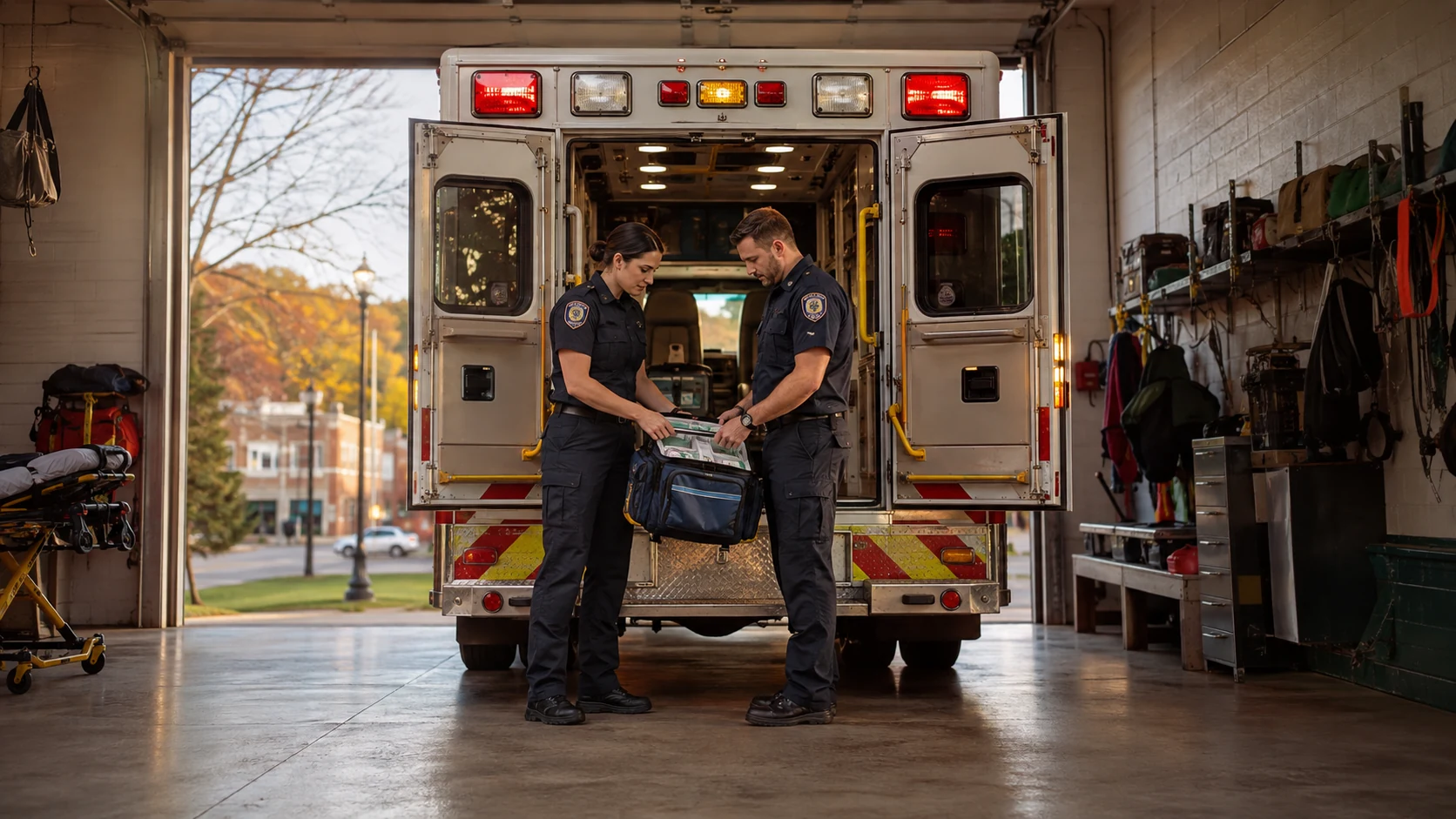
Residents get a licensed physician they can text before they reach for 911. Your medical director keeps protocol authority, and your crews still run every call they should. What shrinks is the low-acuity volume that never needed an ambulance. Ferris, Texas observed 20 percent fewer non-emergent EMS runs after launching.
What actually changes for your department?
Nothing about your dispatch protocols, your response standards, or your medical director’s authority. TAP sits upstream of all of it.
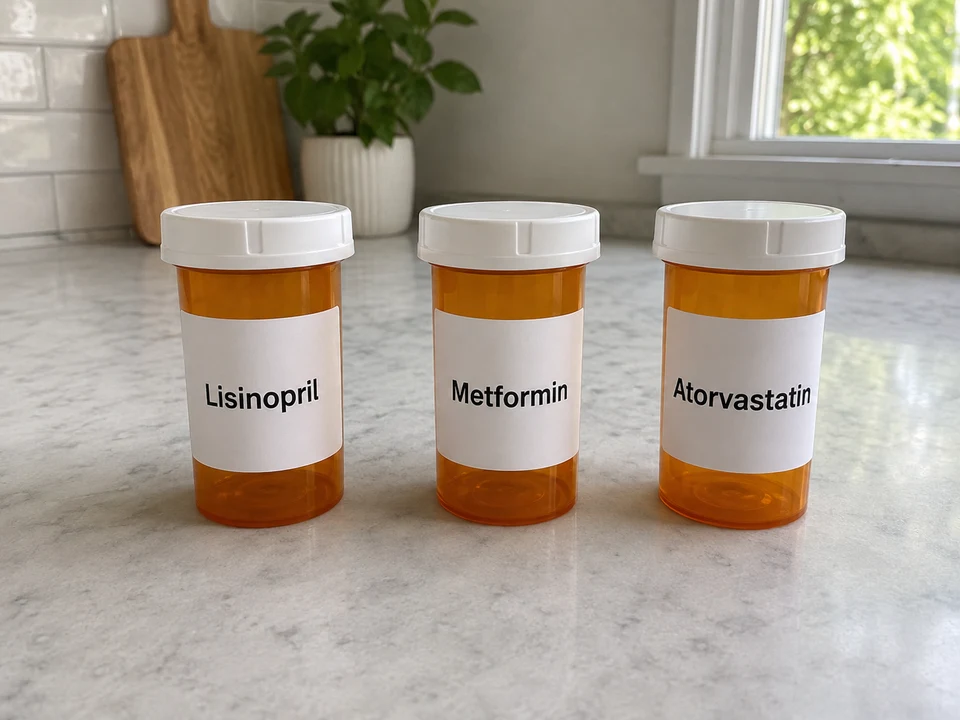
A resident with a sore throat at night, a rash they are worried about, or a prescription that ran out texts a physician instead of calling 911. Most of those conversations end with a diagnosis and a prescription sent to a pharmacy. Some end with the physician telling the patient to call 911 immediately. That second group matters as much as the first, because it means the calls your crews do get are the calls they should be getting.
TAP is not a triage layer on your 911 line. It does not sit between a caller and your dispatcher, and it never handles emergencies. Chest pain, stroke symptoms, difficulty breathing, severe bleeding, altered mental status: the physician tells the patient to call 911, gives a reason, and confirms the patient has a way to get to the hospital. The instruction is always specific. Never “seek care.”
Who keeps clinical control?
You do. This is the question every fire chief asks first, and the answer has to be clean.
Your agency’s medical director keeps offline and online medical direction for your personnel. TAP does not write your protocols, review your run reports, or supervise your paramedics. The National Association of State EMS Officials publishes its National Model EMS Clinical Guidelines (Version 3.0, March 2022) as material for state and local medical directors to adapt, not as a mandate. That principle does not change because a city adds a text-based physician service.
TAP runs its own clinical governance in parallel. Physician medical directors supervise the advanced practice providers on the platform, review flagged encounters, and set the platform’s clinical protocols. Every provider holds an active, unrestricted license in each state where they practice. TAP does not prescribe controlled substances under any circumstances, which removes the diversion question before anyone raises it.
The National Association of EMS Physicians treats medical oversight as the defining feature of any program that moves care outside a transport, and publishes a position statement and resource document on mobile integrated health care and community paramedicine in Prehospital Emergency Care. If a vendor cannot tell you who the supervising physician is and what happens to a flagged chart, that is the wrong vendor.
What does the peer-reviewed evidence actually show?
The strongest published work on physician-directed telemedicine inside an EMS system is the ETHAN program in Houston.
Langabeer and colleagues studied 5,570 patients who received a telehealth consultation with a board-certified emergency physician, matched against 5,570 traditional EMS controls over twelve months. Eighteen percent of the telehealth group were transported to an emergency department, compared with 74 percent of controls. Median back-in-service time for the responding unit was 39 minutes versus 83 minutes, a difference the authors reported as roughly 2.1 times more productive time per unit (West J Emerg Med. 2016;17(6):713-720).
Two things are worth reading carefully in that study. The physician was an emergency physician with real experience, not a call-center script. And the outcome measured was transport avoided, not cost saved. Houston reported what it observed.
Why have treat-in-place programs underperformed?
Because most of them stopped at the encounter.
The Centers for Medicare and Medicaid Services ran the Emergency Triage, Treat, and Transport model starting January 2021 and ended it early after three years. The final evaluation is uncomfortable reading. Only 38 percent of the 185 participating ambulance organizations delivered any interventions at all. More than 90 percent of what did get delivered was treatment in place, mostly by telehealth. And patients who received treatment in place had higher rates of follow-up emergency department visits and hospitalizations within five days than matched low-acuity emergency department episodes.
The honest reading is that a payment code for treat-in-place moved where the encounter happened without changing what happened next. A patient who is treated and then left alone frequently comes back into the system a few days later, and by then the run is yours again.
This is why every TAP encounter gets a follow-up text within 48 hours, with no exceptions. It is not a satisfaction survey. It is the mechanism that catches a treatment that is not working while it is still a text message instead of a dispatch.
What has TAP observed in the field?
These are results from specific communities, not projections. Where a number comes from one city, it says so.
| Observed outcome | Where it comes from |
|---|---|
| 20 percent fewer non-emergent EMS runs | Ferris, Texas. City Manager Brooks Williams has spoken publicly about the program. |
| More than 50 percent resident adoption | Ferris, Texas |
| 70 percent household retention | Algonquin, Illinois, measured after the decline-participation window closed |
| 93 percent of encounters resolved without another claim | Platform-wide |
| 9.9 out of 10 resident rating | Platform-wide |
| 780+ public-sector partners | Program to date |
Ferris is a town of roughly 7,000 people. A 20 percent reduction there is a real observed result in that community. It is not a forecast for a department of any other size, call mix, or demographic profile, and TAP does not present it as one.
How should you size this for your own agency?
Start with your own numbers, not with any of the figures above.
Any dollar figure you see about avoided dispatches is a model, not an observation. Here is the method, so you can run it yourself and see exactly where it becomes an estimate:
- Pull your baseline count of non-emergent runs for a full year from your own records. This number is observed.
- Apply a reduction rate. This is the modeled step, and it is the one that can be wrong. Ferris observed 20 percent. Use a lower figure for your first-year planning unless you have a reason not to.
- Multiply by your own fully loaded cost per dispatch, including personnel, apparatus, fuel, and the unit hours each run consumes. Public-sector cost per avoided dispatch commonly falls between $450 and $900, but your finance director’s number beats any range published by a vendor.
The output is an estimate until you have twelve months of your own post-launch data, and it is worth presenting to your council that way. Showing a range and naming the assumption behind it holds up in the second budget cycle. A vendor’s savings number, repeated as a promise, tends not to.
What does TAP not handle?
TAP does not replace a resident’s primary care doctor, and it is not the whole of anyone’s medical care. Emergencies go to 911, and chronic disease still belongs with the physician managing it. There are no controlled substances on the platform at all. Nothing in the program reaches your medical direction, your protocols, or your personnel.
What it does is give every household in your city a physician they can text, so that fewer of the calls your crews run are calls that a text message could have handled.
Where should you start?
The useful first conversation is short. Bring your non-emergent run volume, your loaded cost per dispatch, and your medical director. Those three things determine whether this is worth your time, and you will know inside an hour.
Talk with the TAP partnerships team.
Sources
- Langabeer JR, Gonzalez M, Alqusairi D, et al. Telehealth-Enabled Emergency Medical Services Program Reduces Ambulance Transport to Urban Emergency Departments. West J Emerg Med. 2016;17(6):713-720. Full text
- National Association of EMS Physicians. Mobile Integrated Health Care and Community Paramedicine: A Position Statement and Resource Document of NAEMSP. Prehospital Emergency Care. 2025. Article
- National Association of State EMS Officials. National Model EMS Clinical Guidelines, Version 3.0. March 2022.
- Centers for Medicare and Medicaid Services. Emergency Triage, Treat, and Transport (ET3) Model: Final Evaluation Report at a Glance. 2025.